Industrial Borescope Camera for Visual Inspection | JEET
- Share
- Issue Time
- May 21,2026
Summary
Learn what an industrial borescope camera is, how it works, and how it helps improve remote visual inspection, maintenance efficiency, and equipment safety.
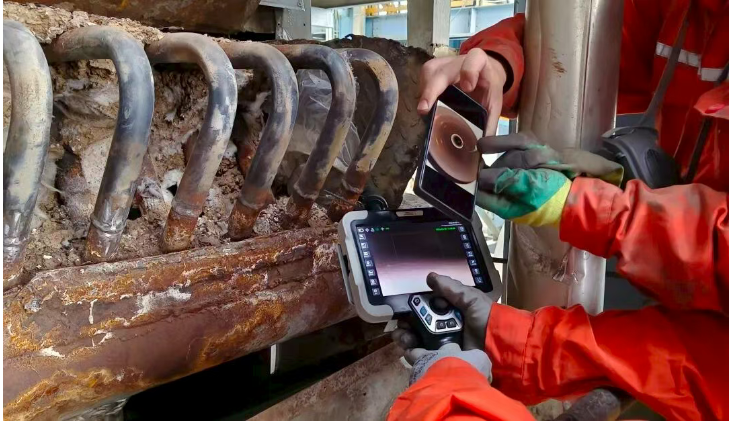
In modern industrial maintenance, the most expensive risks are often the ones you cannot see.
An industrial borescope camera allows engineers, inspectors, and maintenance teams to visually inspect internal areas of machinery, engines, turbines, castings, welds, and other hard-to-reach structures without unnecessary disassembly. For companies that value uptime, safety, and inspection accuracy, it has become an essential tool for remote visual inspection.
What Is an Industrial Borescope Camera?
An industrial borescope camera is a professional visual inspection device designed to capture images and videos inside confined, complex, or inaccessible spaces. It usually consists of a camera probe, insertion tube, lighting system, display unit, and image processing system. Compared with basic inspection cameras, an industrial-grade borescope is built for demanding environments where image clarity, probe flexibility, durability, and inspection reliability are critical.
In many industries, equipment defects begin in hidden areas: inside engine cylinders, turbine blades, heat exchanger tubes, cast components, gearboxes, hydraulic systems, or welded structures. Without the right visual inspection tool, these issues may remain unnoticed until they cause downtime, safety incidents, or costly repairs. A video borescope helps maintenance teams detect early signs of damage and make better decisions before minor defects become major failures.
How Does a Borescope Camera Work?
A borescope camera works by sending a slim camera probe into the inspection area. The probe captures real-time images or videos, while built-in LED illumination provides light in dark internal spaces. The image is displayed on a monitor or control unit, allowing the operator to observe surface conditions, identify abnormalities, record inspection results, and document defects for maintenance reports.
Advanced industrial borescopes may include joystick-controlled articulation, high-resolution imaging, measurement functions, image enhancement, defect annotation, and data storage. These features are especially valuable when inspectors need to evaluate cracks, corrosion, wear, blockages, foreign object damage, burrs, welding defects, or surface deformation inside complex components.
Camera Probe
Captures clear images and videos inside narrow or complex inspection areas.
LED Illumination
Provides stable lighting for dark internal spaces and detailed surface observation.
Display Unit
Shows real-time inspection images for quick analysis and decision-making.
Data Recording
Stores photos, videos, and inspection records for maintenance documentation.
Why Industrial Inspection Requires More Than a Basic Camera
A consumer-level camera may be useful for simple observation, but industrial environments require a higher level of performance. Maintenance teams often work in conditions involving oil, dust, high-value equipment, narrow access points, curved channels, or long inspection paths. In these cases, image quality and probe control directly affect inspection results.
A professional industrial borescope is designed to support repeatable, efficient, and evidence-based inspections. It helps reduce unnecessary dismantling, shortens inspection time, and improves the consistency of maintenance decisions. For industries where downtime is expensive, this can create measurable value throughout the equipment lifecycle.
Key Benefits of Using an Industrial Borescope Camera
- Reduced downtime: Inspect internal components without full disassembly.
- Lower maintenance costs: Detect early-stage defects before they become major failures.
- Improved safety: Identify hidden risks in engines, turbines, pressure equipment, and mechanical systems.
- Better documentation: Record images and videos for inspection reports, quality control, and traceability.
- Faster decision-making: Give engineers visual evidence to support repair, replacement, or continued operation decisions.
Common Applications of Industrial Borescope Cameras
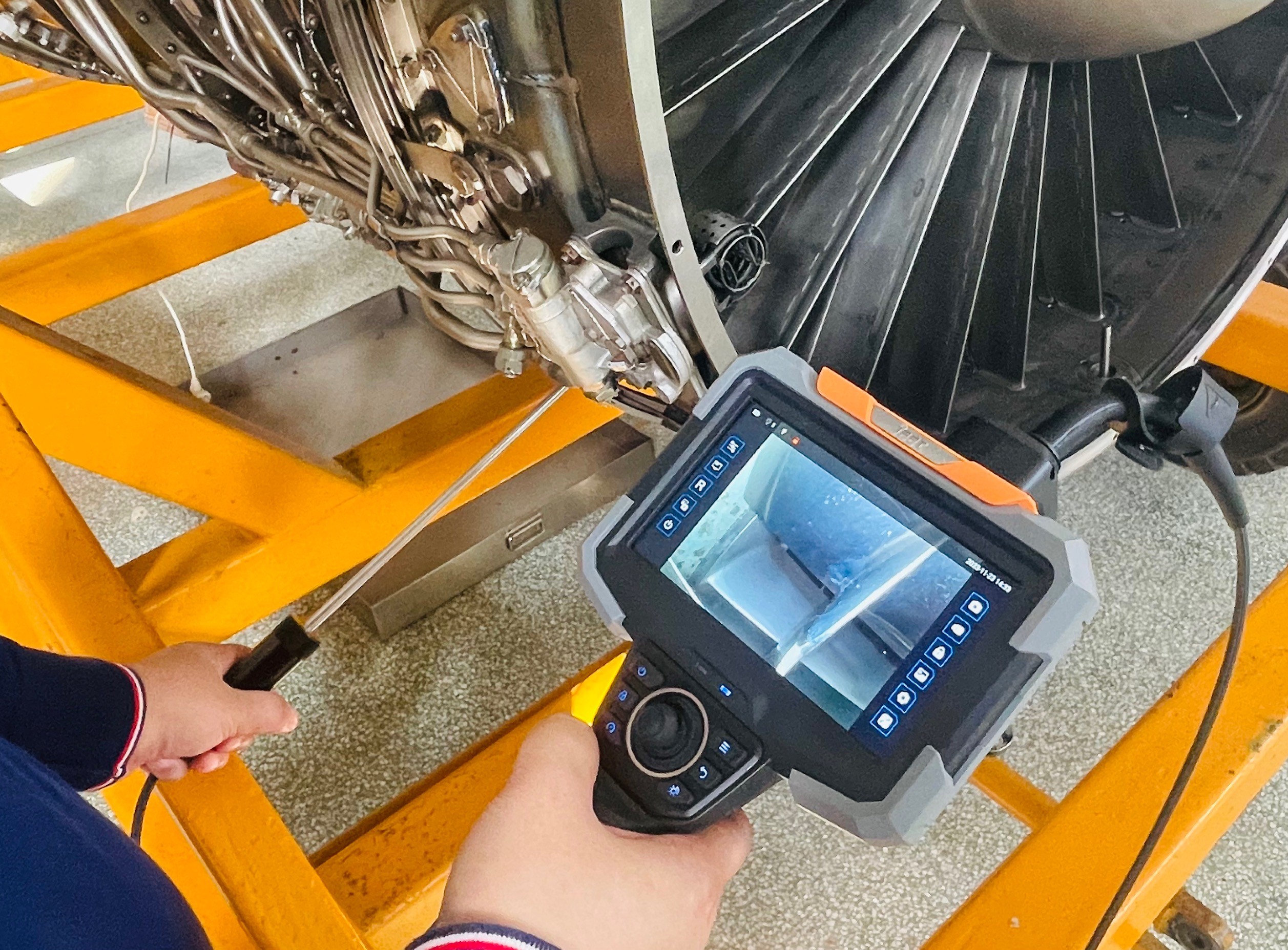
Industrial borescope cameras are widely used across manufacturing, aviation, automotive, power generation, casting, precision machining, and equipment maintenance. Their main value is the ability to inspect internal areas that are difficult or impossible to reach with direct visual inspection.
| Industry | Inspection Areas | Typical Defects |
|---|---|---|
| Aviation MRO | Aircraft engines, turbine blades, combustion chambers | Cracks, FOD, corrosion, blade damage |
| Power Generation | Gas turbines, boilers, heat exchangers, generators | Wear, overheating marks, deposits, internal damage |
| Automotive | Engines, cylinders, gearboxes, EV components | Carbon deposits, scratches, leakage traces, wear |
| Manufacturing | Castings, machined parts, welds, internal cavities | Burrs, porosity, cracks, incomplete processing |
How to Choose the Right Industrial Borescope
Choosing the right borescope camera depends on your inspection environment, access limitations, defect type, and reporting requirements. A product that works well for simple visual checks may not be enough for high-value industrial assets. Before selecting a system, it is important to consider both image performance and practical usability.
1. Probe Diameter and Length
The probe must be small enough to enter the inspection opening, but strong enough for repeated industrial use. For deep cavities or large equipment, a longer insertion tube may be required. For narrow or curved spaces, probe flexibility and bending performance are especially important.
2. Image Resolution and Lighting
Clear image quality helps inspectors recognize subtle surface changes such as fine cracks, scratches, corrosion, or deposits. Adjustable illumination is also important because reflective metal surfaces and dark cavities often require different lighting levels.
3. Articulation and Probe Control
If the inspection area includes complex paths, corners, or blind spots, an articulating borescope can greatly improve inspection efficiency. Controlled probe steering allows the operator to adjust the viewing direction and inspect target areas more thoroughly.
4. Measurement and Documentation
In professional maintenance and quality control, seeing a defect is only the first step. Teams may also need to measure, compare, record, and share inspection results. A video borescope with image capture, video recording, annotation, and measurement capability can support more reliable inspection workflows.
Industrial Borescope Cameras Help Turn Hidden Problems into Visible Data
The real value of an industrial borescope camera is not only that it helps users see inside equipment. It helps companies turn hidden conditions into visible inspection data. With clearer visual evidence, maintenance teams can reduce uncertainty, improve repair planning, and make decisions based on actual equipment conditions rather than assumptions.
Whether used for routine maintenance, troubleshooting, quality control, or safety inspection, a professional borescope camera can support faster inspections and more reliable results. For industries where internal defects may lead to expensive downtime or safety risks, remote visual inspection is no longer just an optional tool. It is an important part of modern predictive maintenance and quality assurance.
Looking for a Professional Industrial Borescope Solution?
JEET provides professional borescope camera and video borescope solutions for industrial inspection, aviation maintenance, power generation, automotive manufacturing, and precision equipment maintenance. Our inspection systems are designed to help teams see more clearly, inspect more efficiently, and make better maintenance decisions.
Contact Us for a Suitable Borescope Solution