See the Unseen: How Next-Gen Industrial Borescopes Are Redefining Inspection Standards in 2026
- Share
- Issue Time
- Mar 6,2026
Summary
Welcome to the new age of Industrial Borescope Inspection, where high-definition optics meet artificial intelligence to deliver unprecedented clarity, efficiency, and predictive power. As we move through 2026, industries from aerospace to power generation are shifting from reactive repairs to proactive maintenance, and the industrial video borescope is at the heart of this transformation.
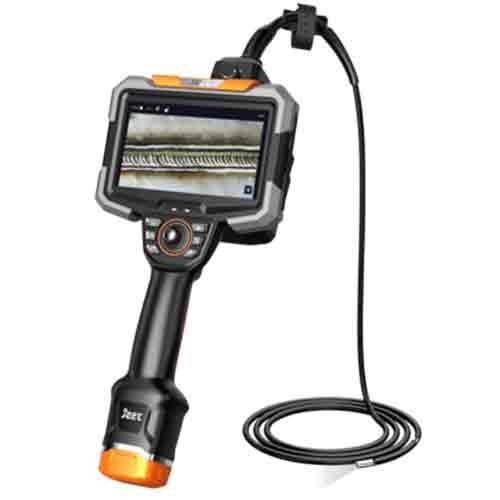
In an era where downtime costs millions and safety is non-negotiable, the ability to inspect the inaccessible without disassembly is no longer a luxury—it’s a necessity.
Welcome to the new age of Industrial Borescope Inspection, where high-definition optics meet artificial intelligence to deliver unprecedented clarity, efficiency, and predictive power. As we move through 2026, industries from aerospace to power generation are shifting from reactive repairs to proactive maintenance, and the industrial video borescope is at the heart of this transformation.
The Hidden Cost of Traditional Inspection
For decades, inspecting internal components of turbines, engines, pipelines, and complex machinery meant one thing: disassembly. This traditional approach was not only labor-intensive and time-consuming but also introduced risks of human error and potential damage during reassembly. In highly regulated sectors like aviation and energy, the cost of unplanned downtime can exceed $100,000 per hour.
The question isn’t whether you can afford advanced inspection tools; it’s whether you can afford not to use them.
What Makes a Modern Industrial Borescope Different?
Gone are the days of fuzzy, grainy images and rigid probes that could barely navigate a single bend. Today’s industrial video borescopes are sophisticated diagnostic ecosystems designed for the challenges of Industry 4.0 and beyond.
1. Ultra-High Definition & 3D Measurement
Modern borescopes now feature 4K resolution sensors and advanced LED lighting systems that illuminate even the darkest cavities with true-to-life color fidelity. But visibility is just the start. Integrated 3D stereo measurement capabilities allow inspectors to measure cracks, corrosion, and pit depths with micron-level accuracy directly on-site, eliminating guesswork and reducing the need for secondary verification.
2. AI-Powered Defect Recognition
The biggest leap in 2026 is the integration of Edge AI. Leading borescope systems now come equipped with onboard algorithms trained on millions of defect images. As you scan an engine blade or a pipeline weld, the system automatically highlights potential anomalies—such as micro-cracks, foreign object debris (FOD), or thermal coating degradation—in real-time. This reduces inspector fatigue and ensures consistent detection rates, regardless of the operator’s experience level.
3. Articulation & Durability in Extreme Environments
From the freezing heights of wind turbine gearboxes to the scorching interiors of gas turbines, modern probes are built to endure. With multi-way articulation (up to 4-way steering) and diameters as small as 2mm, these tools navigate complex geometries with ease. Constructed from tungsten-braided sheaths and sapphire tips, they resist crushing, abrasion, and extreme temperatures up to 1000°C+ with specialized cooling adapters.
4. Seamless Connectivity & Cloud Integration
Data silos are a thing of the past. Contemporary borescopes offer Wi-Fi 6 and 5G connectivity, allowing live streaming of inspections to remote experts anywhere in the world. Reports are generated automatically, tagged with GPS location, timestamp, and AI analysis, then synced directly to your CMMS (Computerized Maintenance Management System) or cloud storage for long-term trend analysis.
Industry Applications: Where Precision Meets Performance
Aerospace & Aviation
In aviation, safety is paramount. Borescopes are critical for inspecting turbine blades, combustion chambers, and fuel nozzles without engine removal. With the global fleet aging and air traffic rebounding to record highs in 2026, rapid turnaround times are essential. AI-assisted borescopy helps MRO (Maintenance, Repair, and Overhaul) facilities certify aircraft faster while adhering to strict FAA and EASA regulations.
Automotive & Manufacturing
As electric vehicles (EVs) dominate the roads, the complexity of battery packs and motor assemblies requires new inspection protocols. Borescopes allow manufacturers to verify weld integrity inside battery modules and inspect internal combustion components in hybrid systems without destructive testing. In general manufacturing, they ensure quality control in casting, molding, and assembly lines.
Power Generation & Energy
Whether it’s a nuclear reactor, a hydroelectric dam, or an oil refinery, infrastructure integrity is critical. Borescopes enable the inspection of boiler tubes, condenser pipes, and pressure vessels during short scheduled outages. The ability to detect early-stage corrosion or erosion prevents catastrophic failures and extends asset life by years.
Infrastructure & Civil Engineering
Beyond heavy industry, borescopes are increasingly used to inspect bridges, sewage systems, and HVAC ducts. Their portability and versatility make them indispensable for civil engineers tasked with maintaining aging infrastructure in urban environments.
Choosing the Right Partner for Your Inspection Needs
With the market flooded with options, selecting the right industrial borescope provider can be daunting. Here’s what to look for in 2026:
The Future is Clear: Invest in Visibility
As we advance further into the decade, the line between physical inspection and digital twin technology will blur. The data captured by your borescope today feeds the predictive models of tomorrow. By integrating advanced visual inspection into your workflow, you aren’t just fixing problems; you’re preventing them.